Some winds
arrive without
warning.
They move
through
what seemed fixed,
unsettle what
had become too still
and leave behind
another kind
of clarity.
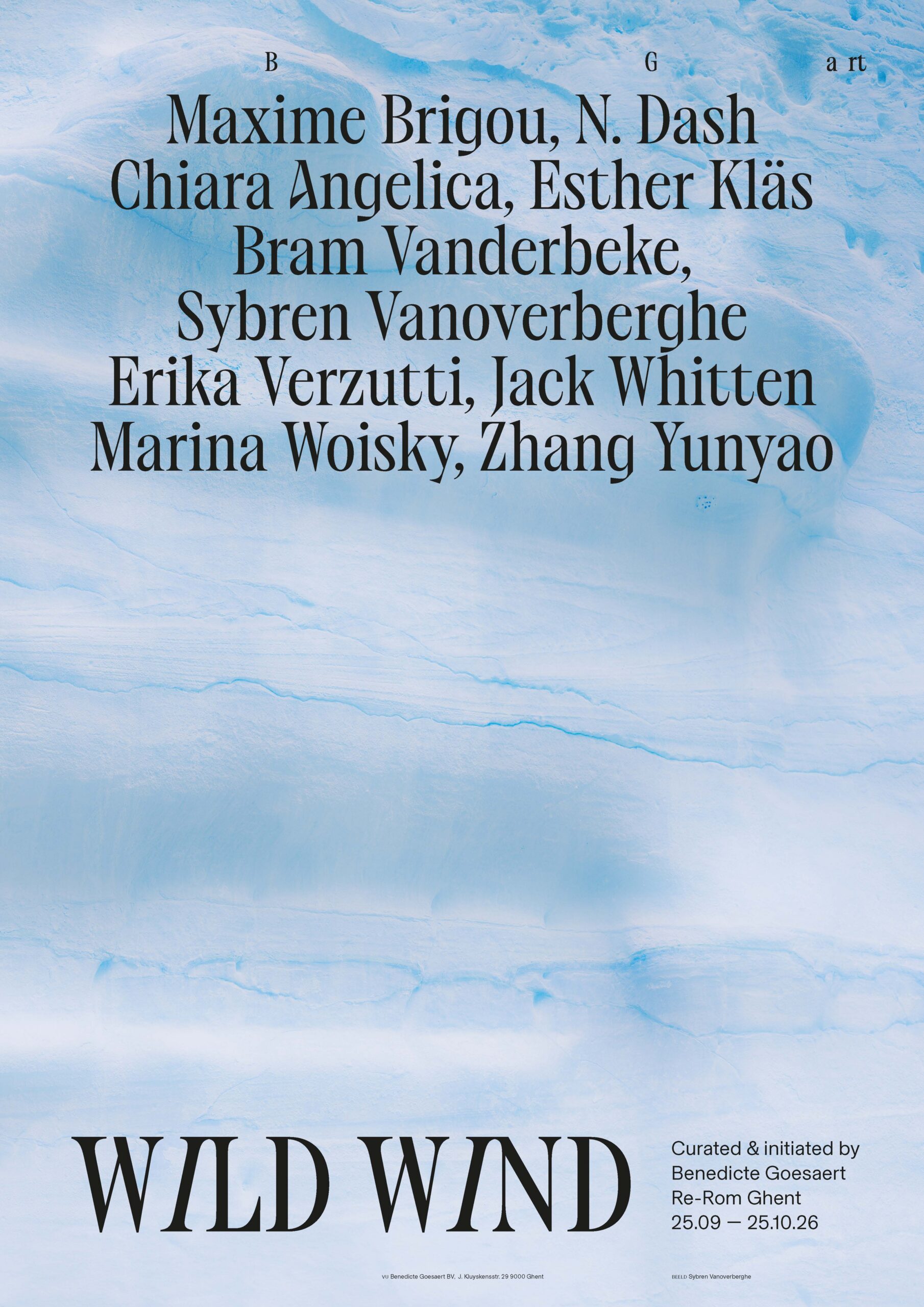
Like a gust of wind that stirs body and mind, the exhibition title breathes oxygen into the imagination: it awakens the senses, stirs emotion and broadens the gaze. Wind cannot be planned or steered; it pays little heed to boundaries or hierarchies drawn up by human hands. It moves freely, sets things in motion, and carries traces of the places it has passed through, an image that mirrors how this exhibition came about. W/LD W/ND brings together artistic practices driven by research, intuition and expression, all inviting the viewer to look, and look again. Things are shaped, reshaped, magnified or drawn into sharp focus. Different aesthetic registers sit side by side.
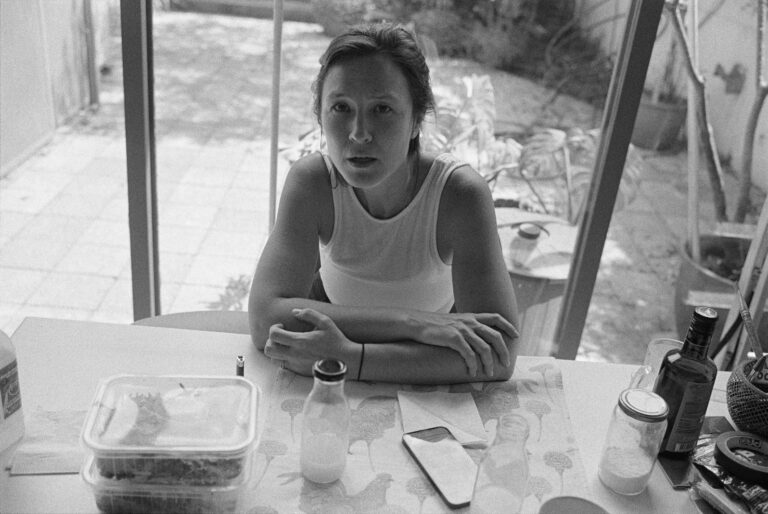
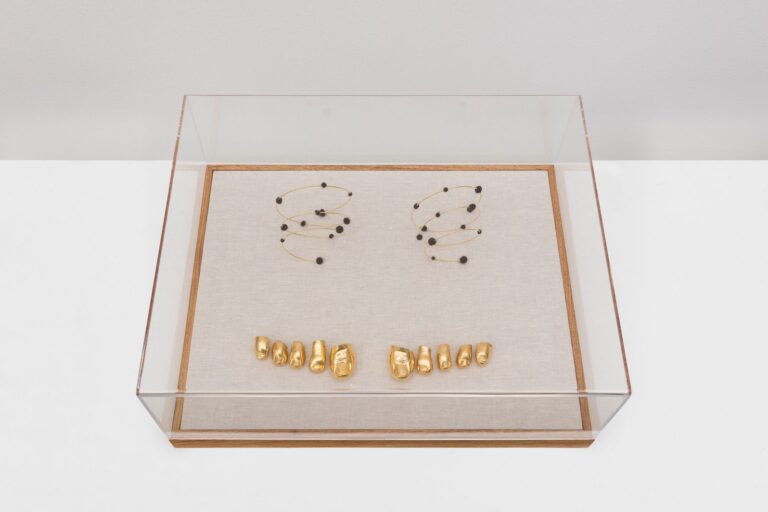
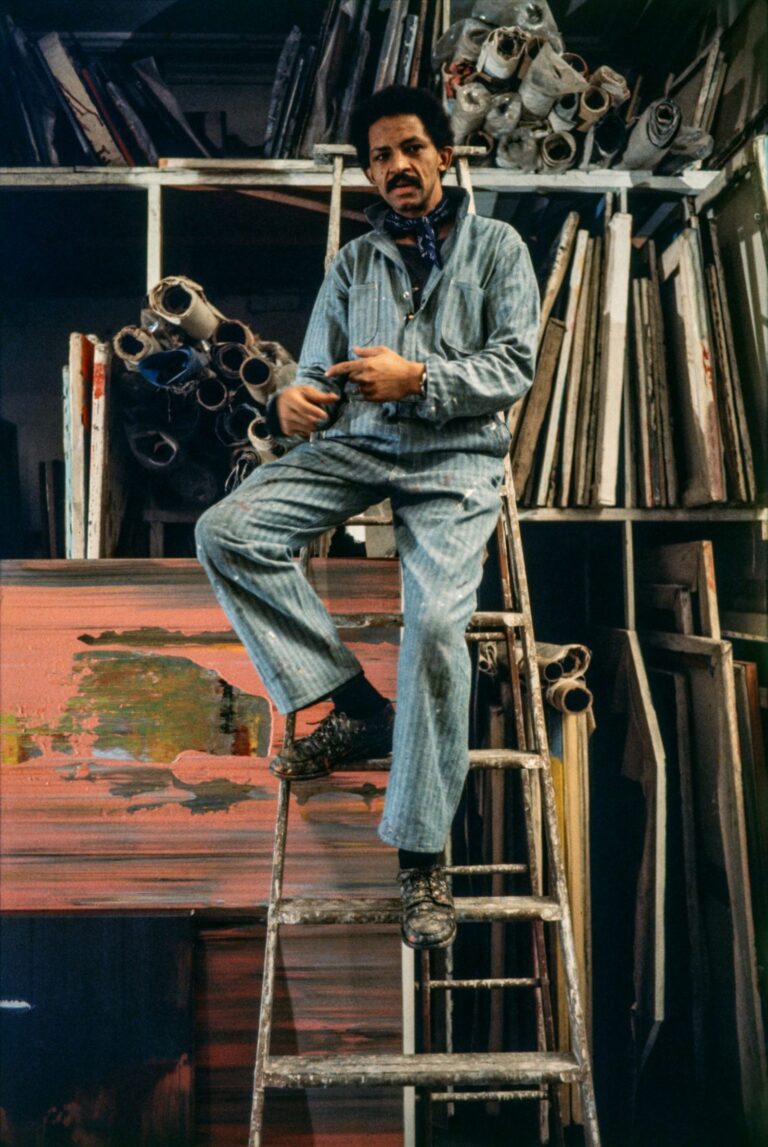
The exhibition brings together new work by Maxime Brigou, Chiara Angelica Gandini (Haus Nuller), Marina Woisky and Zhang Yunyao, alongside carefully selected pieces by N. Dash, Esther Kläs, Bram Vanderbeke, Sybren Vanoverberghe, Erika Verzutti and Jack Whitten. Through material, form and gesture, these artists challenge how we look, think and experience art, life and the world.
W/LD W/ND brings together works by ten artists, several made especially for the exhibition. Together, they form a constellation of distinct practices, connected through shifting relationships between image and object, movement and stillness, material and memory.
Our curatorial and art advisory practices meet in this exhibition. Curating creates dialogues among artworks, the space they inhabit and the viewer. Entering an exhibition may open up new ways of thinking, feeling and seeing. It can also evoke a sense of recognition or resonance, giving form to something familiar. Advising extends this attention beyond the exhibition. We accompany people as they acquire and collect art, attentive to what resonates with them, how an artwork relates to a place and its architecture, and the dialogue it may establish within an existing or developing collection.
Every artwork has a life of its own, one that accumulates moments as it moves through different contexts and becomes woven into someone’s life. W/LD W/ND did not begin with a clear concept. It grew associatively, from encounters with artworks and artists, through studio visits, travel and conversation. Intuition was its starting point, not as an instant attraction, but as a form of knowledge shaped by experience, emotion, attention and time.
The exhibition brings different generations, geographies and aesthetic languages into proximity. Across sculpture, drawing, installation, textilebased work and photography, images and materials are transformed, enlarged, reworked and placed in particular relationships. Some works are quiet and contemplative; others are bold, physical or surreal. Meaning remains in motion, emerging between the works, the space and the viewer.
W/LD W/ND takes place at Re-Rom, the historic Rommelaere campus of Ghent University. The site, formerly dedicated to scientific research and education, is today being given a new, temporary purpose under the management and direction of Monumento.
Over the coming years, Monumento will be responsible for the overall management and activation of the site. Drawing on its expertise in
temporarily repurposing and bringing historic and distinctive buildings to life, Monumento is developing Re-Rom into a dynamic place where culture, entrepreneurship, encounter and social initiatives reinforce one another.
In doing so, Monumento not only creates space for new users and collaborations, but also actively invests in programming, connection
and audience engagement. Over the course of this period of temporary management, Re-Rom is thus growing into a lively place within the city of Ghent, in keeping with the identity and history of the Rommelaere campus. In line with this ambition, Monumento is involved in W/LD W/ND as a supporting partner. Monumento contributes to the artistic development of Re-Rom and helps to give art and culture an essential place in the site’s new dynamic. The building was designed in 1898 by engineer-architect Louis Cloquet in the neo-Gothic style